
Two-Base Europe Trips: Fewer Hotel Moves, Better Vacations
(5 minute read)
In 9 to 12 days, two excellent home bases usually beat four or five rushed stops. You will spend less time packing and transferring, save money on taxis and tips, and keep the energy for better mornings and memorable evenings. Use open-jaw flights (into City A, home from City B), fast trains between bases, and one simple rule: one priority activity in the morning, flexible afternoons nearby.
Why fewer moves win (time, money, energy)
Time: Every hotel change usually costs 1.5 to 3 hours (pack, check out, transfer, check in). Do that four times and you have lost almost a day.
Money: Extra moves mean more taxis, porters, and tips, and more "we gave up" meals.
Energy: Fewer check-ins mean calmer mornings and better evenings, so you enjoy the city you are in.
Think of it as a "move tax" of time, money, and energy. Two bases lower that tax and let you spend on nicer rooms or better experiences instead.
When a two-base plan is perfect
10 to 12 day trips (the sweet spot), or 7 to 9 days if you hate repacking.
Regions with fast, direct trains between your two bases.
You want deeper neighborhood time rather than a checklist.
You are traveling with kids or a multi-generational group.
When to add a third base (exception, not the rule)
The routes are far apart (London to Rome, say) and a midpoint saves a marathon day.
You have a specific countryside anchor that is not a day-trip from either city.
You are staying 14 or more days and want two cities plus one slower rural base.
How to choose the two bases (simple checklist)
Rail first: Is the train between them frequent and under roughly 4 hours?
Neighborhoods: Can you stay where evenings are walkable and varied?
Day-trip menu: Are there 1 to 3 easy day-trips from each base?
Arrival and departure ease: Can you fly into one and home from the other (open-jaw)?
Your theme: Food, art, wine, history? Choose cities that fit what you love.
Six great two-base templates (10 to 12 days)
1) Paris + Provence (Avignon base)
Transfer: TGV Paris to Avignon, about 2h 40m, direct.
Day-trip options:
From Paris: Versailles, Giverny, Reims and the Champagne houses.
From Provence: Pont du Gard, Arles, the Luberon villages (Gordes, Roussillon), Châteauneuf-du-Pape.
Who it is for: Repeat visitors ready to go deeper into France, and anyone who travels for art, wine, and Roman history.
2) London + Paris
Transfer: Eurostar (about 2h 15m, center to center).
Day-trip options:
From London: Windsor, Oxford, Bath.
From Paris: Versailles, Giverny, Reims.
Who it is for: First-timers, teens, a short hop from North America.
3) Rome + Florence (with Tuscany day-trips)
Transfer: High-speed rail, about 1h 30m.
Day-trip options: Siena and Chianti, Pisa and Lucca, the Val d'Orcia (a driver helps in the countryside).
Who it is for: History and food lovers, couples, families.
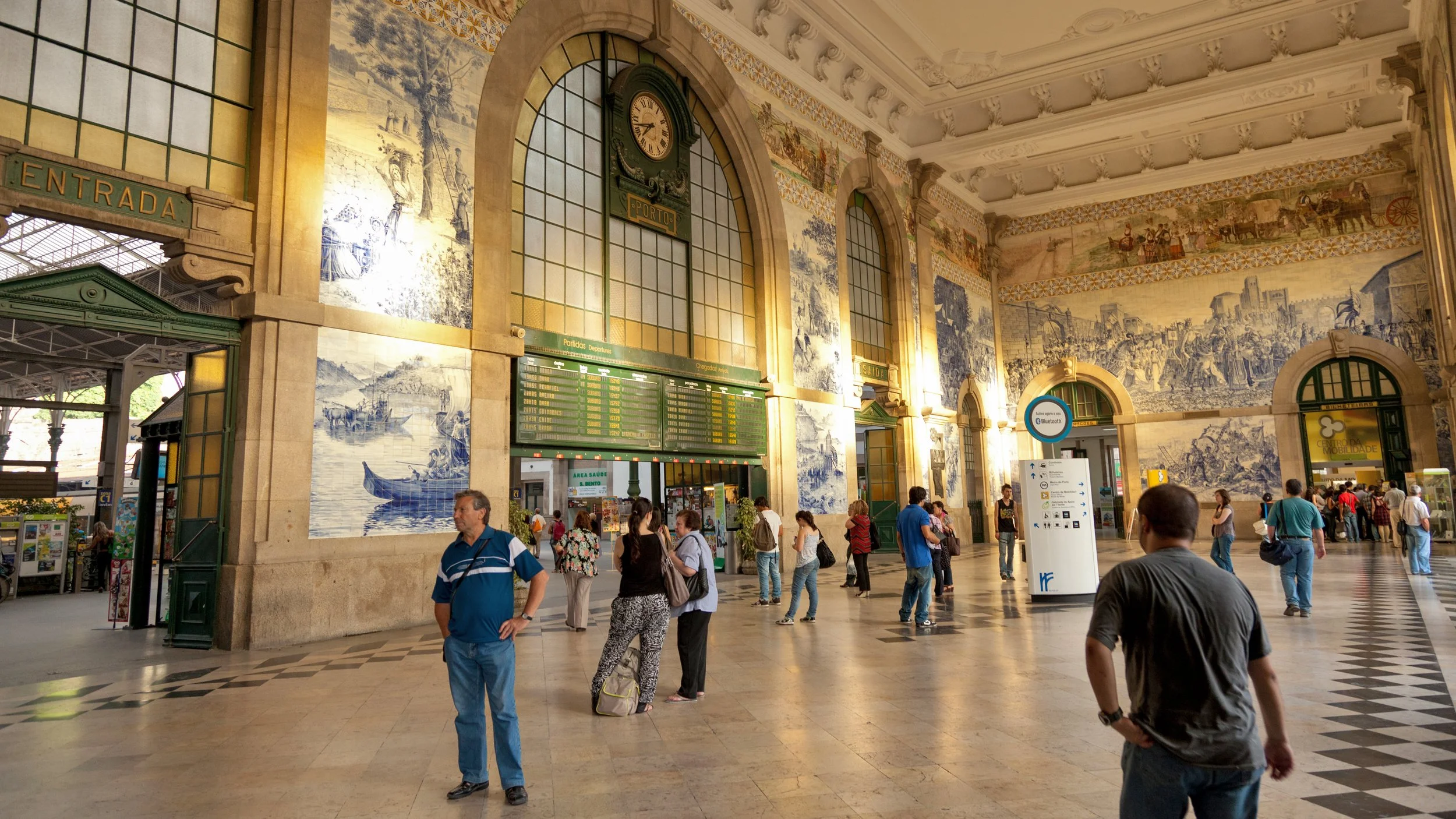
4) Lisbon + Porto (with the Douro)
Transfer: Train, about 3h; one short flight also works.
Day-trip options: Sintra, Cascais, Évora (from Lisbon); a Douro boat or winery (from Porto).
Who it is for: Lovers of food, tiles, river scenery, and good value.
5) Barcelona + Valencia
Transfer: High-speed rail, about 3h.
Day-trip options: Girona and the Costa Brava (from Barcelona); the Albufera and bike rides (from Valencia).
Who it is for: Architecture, markets, bikes, beach walks.
6) Munich + Salzburg (with the lakes)
Transfer: Rail, about 1h 30m.
Day-trip options: Königssee, Chiemsee, Hallstatt; cable cars and boat days.
Who it is for: Easy alpine days without a car.
A sample 10 to 12 day rhythm (replace with your two bases)
Day 1: Arrive Base 1; neighborhood stroll; early dinner. Day 2: Morning priority activity; flexible afternoon nearby. Day 3: Day-trip or local neighborhoods; easy evening. Day 4: Second morning anchor; light afternoon; dinner close to the hotel. Day 5: Transfer to Base 2 (late-morning train); gentle afternoon plan. Day 6: Morning anchor; evening in the best neighborhood for food. Day 7: Day-trip; back by dinner. Day 8: Buffer day (weather or energy); markets and parks. Day 9 to 11: Optional second day-trip or deeper local time. Final day: Depart from Base 2 (open-jaw) with a calm morning.
Priority activity first means the thing that matters most to you (a famous sight, a market, a winery visit, a cooking class) goes in the calmest slot, while everything else stays walkable and skippable.
Budget implications (clear and simple)
Two bases usually mean fewer taxis and less porterage, and less friction spend overall.
You can often upgrade the hotel or splurge on a standout experience with the savings from avoided moves.
Open-jaw flights cut backtracking costs and hand you one extra usable day.
Common mistakes (and the fix)
Four or five bases in 10 days. Fix: pick two and add day-trips.
Buying tickets before the plan. Fix: sequence days first, then purchase.
Ignoring station locations. Fix: choose hotels with easy station access on transfer days.
Assuming you will be bored with two bases. Fix: list 3 or 4 neighborhoods and 1 or 2 day-trips per base, and you will not run out.
FAQs
Can I still add a third place for one night? You can, but it brings back the move tax. If you must, make it a simple hop and keep expectations low for that day.
How do I handle luggage on trains? Use medium suitcases and reserve seats. Pick hotels close to the stations on transfer days.
Is this approach good for kids? Yes. Fewer moves, predictable mornings, parks near your base, and trains under 3 hours make a real difference.
What about night trains? Great when they replace a hotel night and land you in your second base at a humane hour.
Want to see it in person?
We're planning My Life in Burgundy, a small-group journey for up to 14 guests through the churches, vineyards, and tables of southern Burgundy. Join the waitlist to hear first when details are ready. No payment, no commitment.
See My Life in Burgundy