
Museum Audio Guides: A Field Guide to the Voices, the Drama, and the Unexpected ASMR
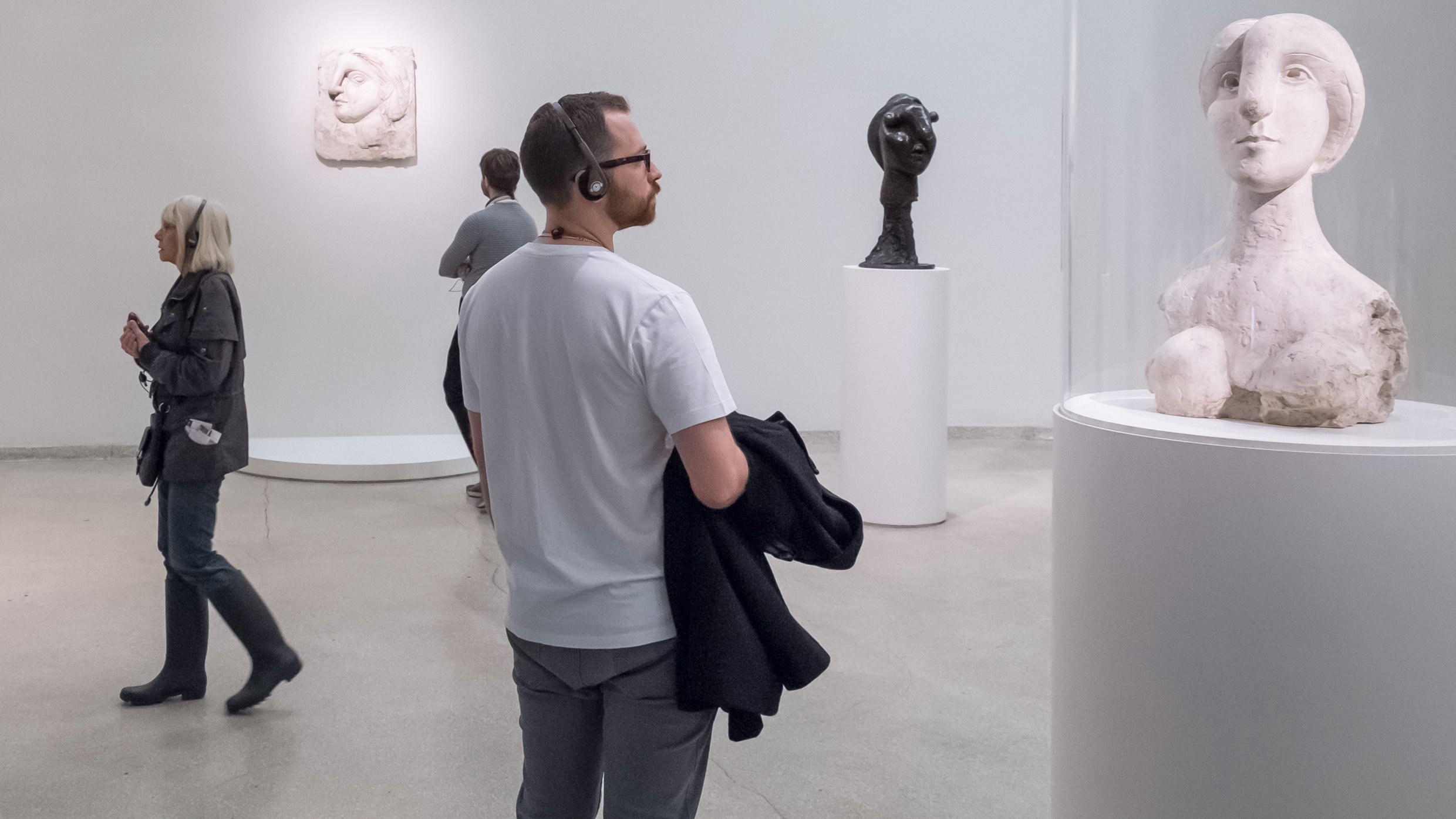
(7 minute read)
There is a very specific kind of travel intimacy that begins the moment you put on museum headphones. Suddenly the crowd fades, the room narrows, and you are alone with a painting, a sculpture, or a suspiciously ornate object whose purpose you cannot begin to guess, until a calm voice in your ear explains that this 600-year-old panel of saints is really political messaging, dynastic anxiety, and public relations in tempera.
Often that voice belongs to someone who sounds like they have spent years gently explaining masterpieces to distracted strangers and have made peace with it. Sometimes their name is Martin. Sometimes they have a British accent so reassuring that you immediately trust them with your intellectual future.
Audio guides are one of the most underrated tools in travel. They are also wildly inconsistent. At their best, they are miniature masterclasses: elegant, surprising, deeply clarifying. At their worst, they sound like a paragraph copied from a wall label and read aloud by someone who has never once looked up from the script. And occasionally, unexpectedly, they become so soothing that you briefly consider whether museum commentary could replace your sleep playlist.
This is a field guide to museum audio guides: the voices you will meet, the drama they deliver, and how to use them without turning your museum visit into a slow cognitive collapse.
First: choose your audio-guide adventure
Most museums now offer some version of three systems, and each has its own personality.
The rented device is the classic, usually shaped like something designed in 2007 and never improved since. It often wins for reliability, because it has one job, and unlike your phone it is not simultaneously running maps, messages, train tickets, and the weather forecast. It looks indestructible because it probably is.
The museum app is convenient and modern and entirely dependent on your battery surviving the day. Apps can be excellent, but only if you prepare, because museums specialize in thick stone walls, emotional Wi-Fi, and dead zones exactly where the masterpiece is. Download everything before you arrive.
QR codes are the purest expression of institutional optimism: surely everyone has signal, battery, patience, and hands available at once. In practice they are a small ritual involving weak reception, awkward scanning angles, and your screen brightness at war with the gallery lighting.
The move, if an app exists, is to install it before you leave your hotel, download the offline content, and bring wired headphones if you can. Bluetooth always decides to misbehave precisely when you are standing in front of something important.
The voices: you will recognize these archetypes
Museum audio guides change languages, countries, and curatorial philosophies, but their vocal archetypes are universal.
The Calm British Narrator. Soft authority, perfect pacing, crisp consonants, immediate trust. This voice could explain medieval tax policy and somehow make it feel emotionally significant. They never rush, and they assume intelligence without demanding expertise, so within thirty seconds you are leaning toward a portrait you would otherwise have walked past. Especially effective in Renaissance galleries, where half the challenge is convincing you that another painting of saints deserves fresh attention.
The Overly Dramatic Actor. Everything is conflict. Every brushstroke carries betrayal, every commission becomes a scandal. You came to look at a portrait and suddenly you are hearing about court intrigue, artistic rivalry, wounded pride, papal maneuvering, and a marriage alliance collapsing in real time. This voice treats every object as if it deserves a streaming adaptation, and sometimes that helps, because museums can go abstract when every single work is excellent and a little theatricality restores the stakes. Ten minutes in, however, you may start craving popcorn.
The Curator Who Is Extremely Into This. Often the best of the bunch. You can hear real affection in the voice. They begin with "what is really interesting here is," and then deliver one niche detail that permanently rewires how you look at the piece: the pigment came from crushed lapis shipped across continents, the sculpture's damaged hand changed art history, the artist painted over an earlier political symbol and forgot one corner. You leave smarter and slightly obsessed. This is the ideal, not more information but one precise fact that changes the entire object.
The Tourist-Mode Speedrunner. Efficient, compact, no emotional digressions. "This object dates from 1521. It matters because of X. Notice Y. Continue to the next room." There is little poetry here, but on a crowded day this voice can save you, because not every gallery needs depth and sometimes you need orientation more than revelation. Especially useful when your feet have begun negotiating terms, the museum is enormous, or lunch ran long and the energy is fading.
The Unexpected ASMR Whisper. You did not request intimacy, yet here it is: quiet tone, slow cadence, careful breathing, crisp detail, and suddenly a ceramic bowl becomes emotionally calming. This one tends to appear in modern museums, design museums, and smaller institutions where someone has decided gentleness is part of interpretation. The side effect is that you become so relaxed you forget you are standing in public until a school group passes behind you.
The drama: why audio guides beat wall labels
The best audio guides understand something simple: facts are not enough, and people need narrative tension. So they give you structure. There is the scandal angle, all rival patrons and offended clergy and political symbolism hidden in plain sight. There is the technique flex, the "look closely at how the light moves here." And there is the human detail, the artist who was broke, impatient, furious, ambitious, grieving, or behind on a deadline.
A painting stops being "old religious art" the moment you learn it was controversial, strategic, or financially desperate. A sculpture becomes vivid when you hear that the marble nearly cracked. A room full of portraits wakes up when you realize everyone is signaling status through impossible collars. If you find yourself unexpectedly invested in a 14th-century altarpiece, the audio guide has done its job.
The hidden risk: museum fatigue by podcast
Audio guides fail when they forget that you are also standing, looking, navigating crowds, reading signs, and managing your own attention. Too much commentary tips a museum into cognitive overexposure, and that is exactly how the fatigue sets in: suddenly everything is "another important object," and your brain starts flattening centuries into one blur of robes, gold frames, and effort.
A few habits keep that from happening. Do not do every track, because this is not a completionist sport; choose highlights, or one artist, or one room, or one theme, or whatever immediately pulls you in, since a selective visit is usually more memorable than an exhaustive one. Use the 90-second rule: if a track has not caught you by then, skip it, you are allowed, and the institution will survive. Alternate audio and silence, doing one piece with commentary and then walking quietly for five minutes, because audio is strongest when there is contrast. And sit down on purpose, because audio guides improve dramatically when you are seated. Benches are not optional furniture; they are museum survival equipment, and a seated listener notices more than a tired one hovering in a doorway trying not to block traffic.
How to build a museum day that still feels human
The best rhythm is simple. Use audio early, when your attention is fresh. Save it for the difficult rooms where context does the heavy lifting, the antiquities, the religious painting, the dense symbolism. Skip it in the emotionally obvious rooms where looking is enough and the work lands without a word.
And for the very large museums, the Louvre-scale, Prado-scale, Uffizi-scale, British Museum-scale ones, embrace a slightly radical principle: leave before exhaustion. The goal is not to cover the museum. The goal is to leave while still curious enough to return. A museum day should end with one or two things vividly remembered, not with mental static.
Why audio guides still matter
At their best, audio guides perform a quiet miracle: they turn "I do not get it" into "oh, now I see." They give objects texture, they slow your eye, and they give you permission to linger. They also rescue you from having to pretend expertise, because you do not need to arrive knowing what matters. That is what the voice is for.
And occasionally, if the narrator is unexpectedly soothing, they offer something rarer: calm. Travel can be noisy and cities can demand too much attention, but a museum with the right voice in your ear becomes one of the few places where information arrives gently. A small lecture, a small story, a small pause. Sometimes that is exactly what the day needed.
Want to see it in person?
We're planning My Life in Burgundy, a small-group journey for up to 14 guests through the churches, vineyards, and tables of southern Burgundy. Join the waitlist to hear first when details are ready. No payment, no commitment.
See My Life in Burgundy