
The Apéro Scale
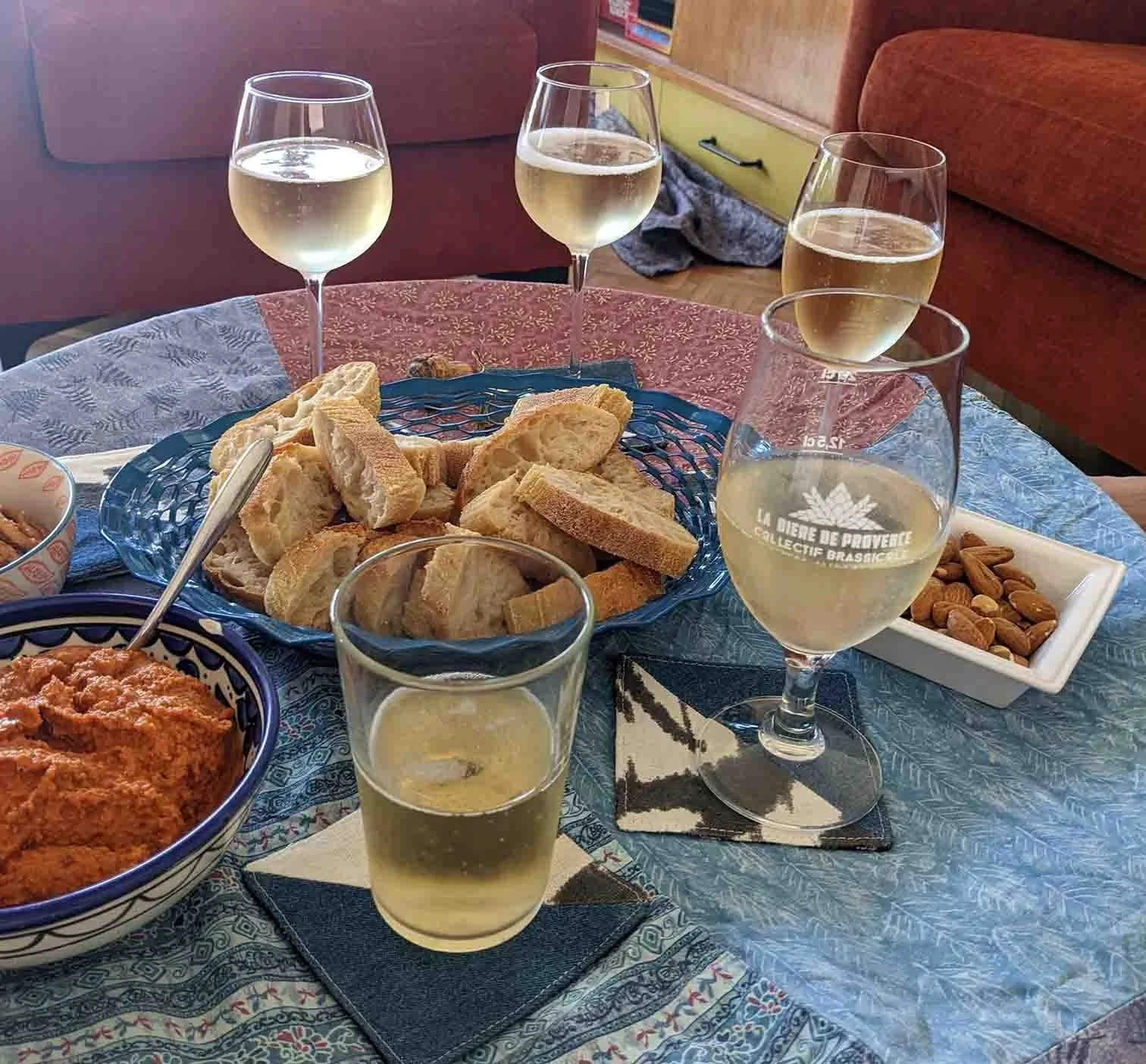
(5 minute read)
In 1805 a British naval officer named Francis Beaufort got tired of sailors arguing about wind. One man's stiff breeze was another man's gale, so he built a scale that skipped the adjectives and described what you could see instead: smoke going straight up, leaves in motion, whitecaps, roof tiles departing. Look out the window, count what is happening, and you know where you stand.
The apéro deserves the same treatment. The French have made one short word do an astonishing amount of work.
An apéro, short for apéritif, is by the French definition a drink served before a meal to open the appetite, or by extension the convivial moment shared around it. You already know every version of it. You have had a glass of wine while someone finished cooking. You have had friends over for drinks and snacks. You have been to a party where the food was on a table and the evening went late. In France, all of those are an apéro. The host will tell you which one you are coming to, so none of this is strictly necessary. A scale is just more fun.
Observable signs only.
Force 1: one glass, something to nibble
The smallest reading on the instrument. Someone pours you a vin de noix, a homemade walnut wine made all over rural France, or a rosé, and there is something on the table to grignoter, to nibble. Usually crackers. Sometimes just crackers.
Half an hour, perhaps a little more, and then dinner. This is the cocktail hour you already know, with different bottles.
Force 2: the apéro at a bar
"Let's meet for an apéro" can mean a bar rather than somebody's house. Same hour, same idea, and somebody else does the dishes. A couple of drinks after work and before dinner, with something to munch on. We usually call it happy hour in the States.
Force 3: the real one
Seven or eight in the evening at somebody's house, usually on a weekend. This is the one most people mean when they say the word, and the one the others are variations on. In American terms, you are having people over.
The observable sign is the finger food, which is set out for everyone to help themselves. In Burgundy that table has a local accent. Gougères, warm cheese puffs made from choux pastry, which are a Burgundy specialty and in my experience always homemade. Jambon persillé, ham set in a parsley jelly, also Burgundian. Rillettes, pork cooked slowly and shredded into a spread. Pâté en croûte, pâté baked in a pastry crust. Then charcuterie, cheese, chips and dip, fruit, and, of course, bread.
The drinks run in a loose order, and the order doubles as a clock. Early on come the kirs, the crémants, pastis and rosé in summer, and beer, and later everything settles into wine. Once it has settled into wine, nobody is in a hurry. If a cognac or porto comes out, you have stayed quite late.
The cassis drinks are worth sorting out, because there are a few variations. A kir is specifically Aligoté with crème de cassis, the blackcurrant liqueur from Dijon. Blanc cassis is any white wine with cassis. Crémant cassis uses crémant de Bourgogne, the local sparkling wine, and is the one I would put in front of a guest. The kir royal you may have heard of is the same idea made with champagne.
Force 3 runs toward midnight.
Force 4: the apéro dînatoire
Dînatoire comes from dîner, and it means what it sounds like. The food will be substantial enough to count as dinner, without anyone serving one. The observable sign is that the plates have stopped being finger food. You are being fed, so come hungry.
Force 5: the one with an appliance on the table
At this level a machine appears.
I have been to an apéro for five people where we made croque monsieurs at the table on a little countertop grill. It was called an apéro. It was dinner. Raclette and fondue can do the same job, and any evening that involves a power outlet and melted cheese is not wrapping up by nine. This is more about vibes than about what’s being served.
Force 6: the party
We have hosted twenty to thirty-five people indoors and, in summer, up to fifty outside. Standing and sitting, casual, with the Force 3 table multiplied until it looks less like a spread and more like a weather system.
You know this one. It is a party. It is still called an apéro.
A few notes before you go
If you are not sure whether dinner follows, ask. Most of the time the invitation already told you, and when it did not, it is an ordinary question with an ordinary answer.
If you run on an empty stomach, have something before you go, unless the word dînatoire came up. An evening of crémant and wine with only finger food behind it gives me heartburn, so I eat first, and a sandwich at six has never made an apéro worse.
And settle in. The one thing that took me a while to adjust to was the pace. The drinks go slowly, the food goes slowly, the conversation is the point, and so it tends to run later than an American evening of drinks would. If you have made it as far as the cognac and the host starts yawning, take the hint. Yawning openly is considered a little rude in France, so that is your cue.
The word stays the same from Force 1 to Force 6. What changes is what is on the table, what is in the glass, and how late you are getting home.
What is the most elastic apéro you have been to, the single glass that ran to midnight or the party that had a grill on the table? Tell us in the comments, and tell us what was being served.