
Rail vs. Short Flights in Europe: Time, Cost & Stress Compared
(5 minute read)
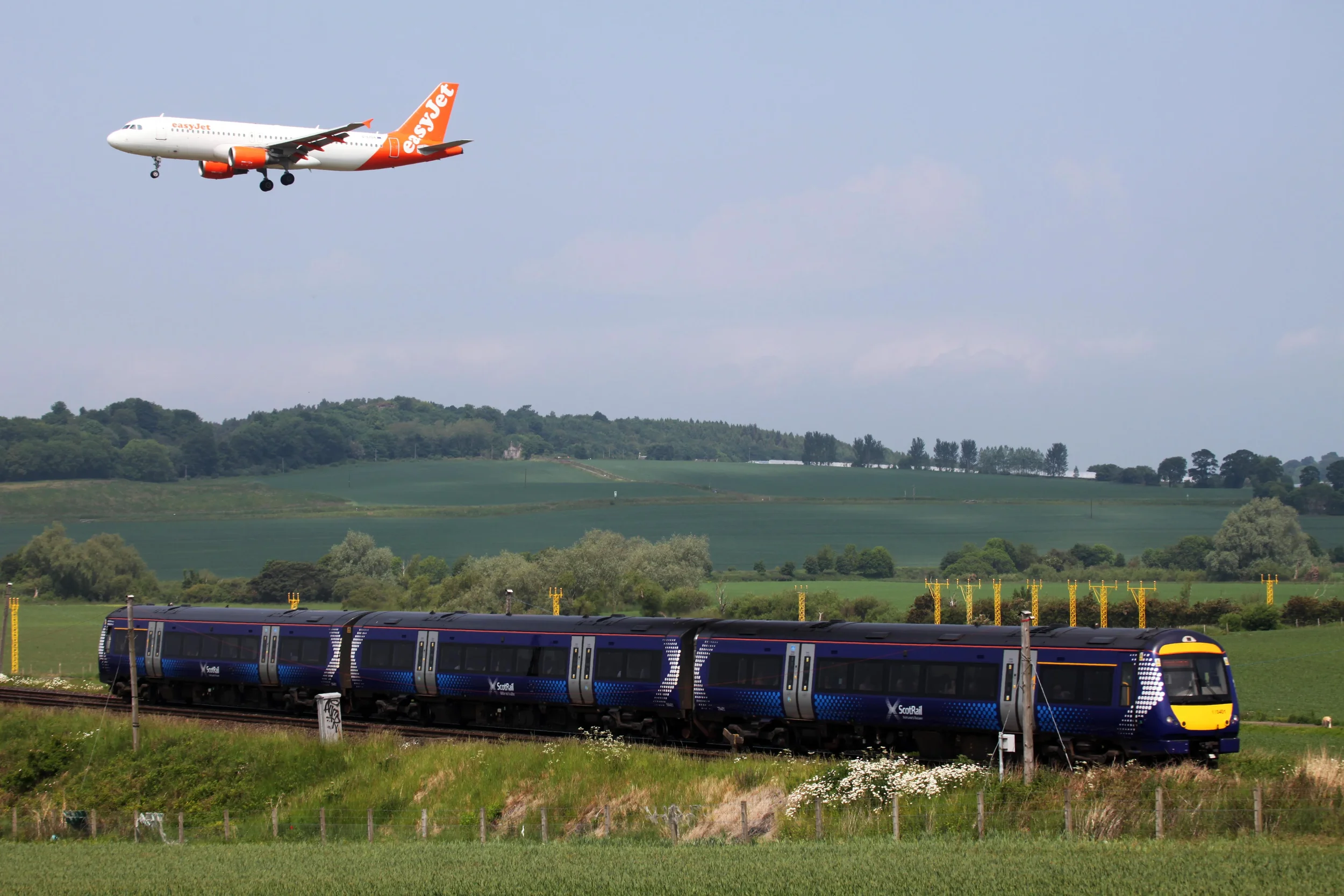
Between big European cities, high-speed rail often wins on door-to-door time, comfort, and stress, especially for trips of around 4 to 6 hours by train. Short flights win when the rail option is much longer or requires awkward connections. The right answer depends on door-to-door math, real costs with bags and seat fees, your energy, and what you want the day to feel like.
How to compare fairly (door-to-door, not just "train time vs flight time")
Door-to-door means:
Getting to the station or airport
Early arrival requirement (trains 10 to 20 min; flights 90 to 120 min)
In-vehicle time (train or plane)
Arrival procedures (plane: taxi to gate, deplane, passport control, bags)
Getting from the station or airport to your hotel
If the train is 6 hours or under, it often beats a 1 to 1.5 hour flight once you include steps 1 through 5. Night trains and sleeper cabins can be a separate win, swapping a hotel night for transport, depending on the route.
Time: quick decision rules
Rail usually wins when:
City centers are well connected by high-speed lines (France, Spain, Italy, Benelux).
You value no liquid limits, no long security lines, and easy boarding.
You are carrying checked-bag-size luggage, with no airline baggage lines or fees.
You want to work, read, or enjoy scenery without turbulence or tight seats.
Flights usually win when:
Train journeys exceed roughly 6 to 7 hours or require multiple changes.
Airports are close to your hotels (rare, but it happens in some cities).
You are stacking a long inter-regional jump, such as Paris to Athens.
Cost: what to include (so numbers don't mislead)
When comparing, add these up for each option.
Train cost: the fare class you will really book, plus seat reservations if required.
Flight cost: base fare, plus carry-on or checked bag fees, plus seat selection if you need it, plus airport transfers on both ends.
Budget flights can look cheap until you add bags, seats, transfers, and the cost of time. Trains can look pricey if you only check last-minute fares; advance purchase often lowers the price.
Stress & comfort: what the spreadsheets miss
Stations are central; airports rarely are.
Boarding: trains are walk-on with minimal early arrival; flights require lines and checkpoints.
Seat space: trains usually offer more legroom, the ability to walk, and a café car, with no turbulence.
Weather and strikes: either mode can be affected. Trains handle mild weather better; flights can cascade delays. National rail or air traffic strikes do happen, so your plan should include buffer time either way.
Security rules: no liquid limits on trains, and sharp items follow local rules but are generally simpler than aviation security.
Do the math once (a quick worksheet you can reuse)
Example: Paris to Barcelona
Train
Hotel to Gare de Lyon: 20 min
Early arrival: 15 to 20 min
In-train time: about 6h 30m on a direct TGV (only two to four run daily, and on some dates the direct is replaced by a one-change routing)
Station to Hotel: 20 to 30 min
Door-to-door: about 7h 30m to 8h
Flight
Hotel to CDG or ORY: 45 to 70 min (typical)
Early arrival: 90 to 120 min
Flight time: about 1h 45m
Taxi to gate, deplane, bags: 30 to 45 min
Airport to Hotel: 30 to 45 min
Door-to-door: about 5h 50m to 7h (can exceed 7h with queues or delays)
Takeaway: they are closer than the raw flight time suggests. If you value work time, comfort, scenery, and low stress, the train's productive hours may tip it. If your hotels are near airports and you are hand-luggage-only, the flight may win.
Baggage & fees: small choices, big swing
Carry-on restrictions: many short-haul airlines enforce strict size and weight limits, and charge at the gate.
Checked bags: add fees both ways when comparing; trains have no bag fees.
Seat selection: if sitting together matters, budget for it on flights. Trains usually include a seat with your ticket, at most with a small reservation fee.
Airport transfers: two rides, to and from airports, can add 40 to 120 euros or more in total, depending on the city.
Energy curve: how the day really feels
Train day: arrive later to the station, work or read, stroll to the café car, step off in the center, with no decompression time required.
Flight day: pack to liquid and weight rules, arrive early, security, gate, boarding, deplane, baggage, ride to town. Many small frictions even when everything is on time.
If you have a priority afternoon plan on arrival (a market, a key sight, a special dinner), trains make it easier to land with energy to spare.
Carbon & conscience (a concise note)
Trains generally have much lower emissions per passenger-kilometer than short-haul flights. If the door-to-door time is comparable, rail is usually the greener choice.
Family, accessibility, and special cases
With kids: rail lets you move around, snack easily, and keep your liquids. Toilets are onboard and there is no turbulence.
Mobility needs: fewer transfers and central stations can simplify the day; verify step-free access for your specific station and coach.
Red-eye arrivals: if you land in Europe and plan an immediate hop to a second city, a train can be gentler than back-to-back flights.
Night trains: consider sleepers when they replace a hotel night and align with your energy.
Island hops and remote regions: flights are often the only practical choice.
Mistakes to avoid (we fix these a lot)
Comparing raw flight time to train time (use door-to-door).
Ignoring baggage, seat, and transfer fees on flights.
Booking flights between two central, rail-friendly cities (you will spend the "saved" time in lines).
Buying tickets before sequencing your day (timing matters; anchor the important sight or meeting first).
Assuming every budget airline is cheaper once you add the true extras.
FAQs
Are trains always more expensive than budget flights? Not necessarily. Advance-purchase fares can be very competitive. Once you add baggage, seat, and airport transfers, trains often match or beat the total.
How early should I arrive? For most intercity trains, 10 to 20 minutes is fine. For flights, plan 90 to 120 minutes, more at peak times or unfamiliar airports.
What about delays and strikes? Both modes can face them. Build in buffers and keep a Plan B for any tight connection.
Can I bring food and liquids on trains? Yes. Bring a picnic if you like. There is usually a café bar onboard too.
Do I need seat reservations on trains? Some high-speed lines require or strongly recommend them, and on routes like Paris to Barcelona the reservation is mandatory and comes with the ticket.
Want to see it in person?
We're planning My Life in Burgundy, a small-group journey for up to 14 guests through the churches, vineyards, and tables of southern Burgundy. Join the waitlist to hear first when details are ready. No payment, no commitment.
See My Life in Burgundy