
Trains Are Romantic. Missing One Is Not.
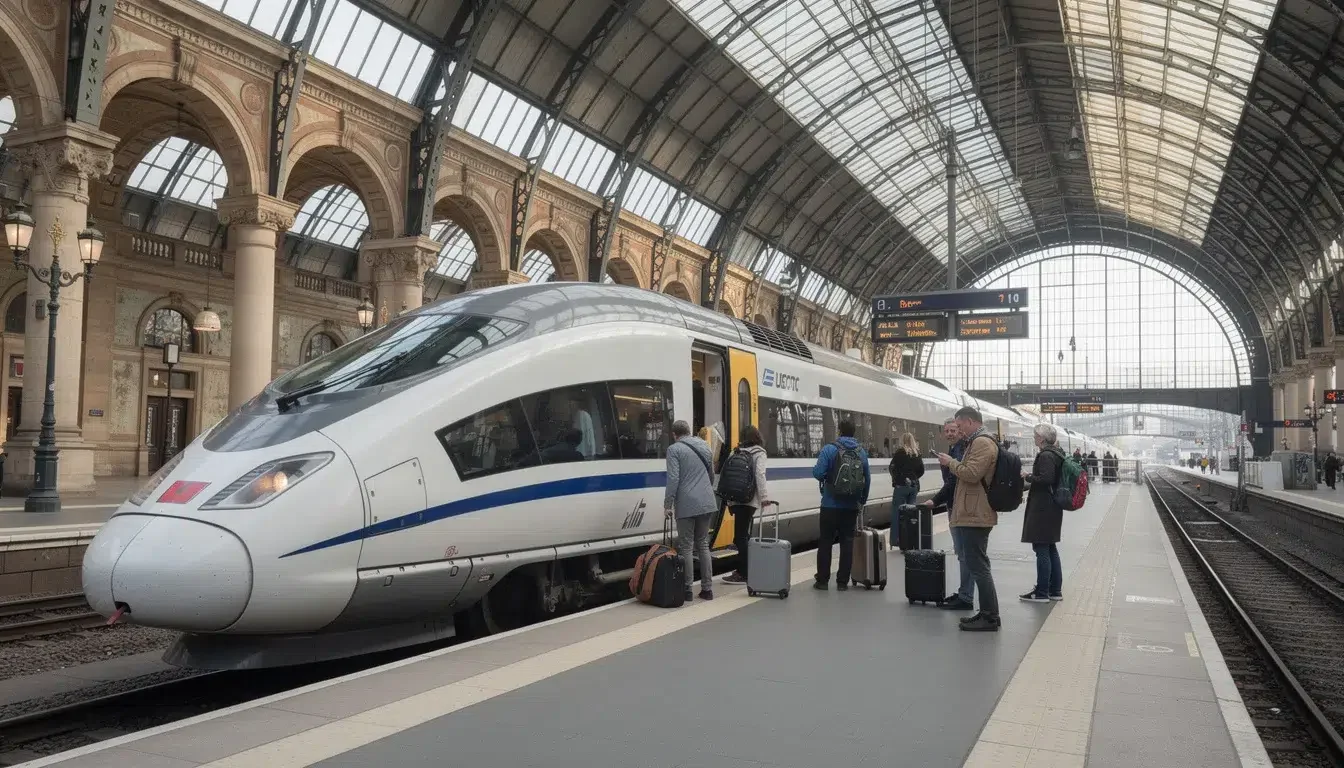
(8 minute read)
I missed a train in Paris once, and it was entirely my own fault. A friend and I had dinner at a restaurant that was not especially close to the station, and I made a string of small errors that added up to a large one. I forgot how gloriously unhurried a French server can be, so after the plates came down we did not see ours again for the better part of an hour. Then we went the wrong direction on the Metro, realized it, doubled back. We reached the station just a few minutes too late, and it was the last train of the day. I felt deeply stupid, paid for a hotel room we had not planned on, and left first thing in the morning.
I tell you this so you know the rest of this guide comes from someone who has made the mistakes, not someone lecturing from a platform above you. Train travel in Europe is one of the great joys of being alive: city center to city center, scenery that occasionally makes you forget you are a functioning adult with responsibilities, and the rare luxury of showing up twelve minutes before departure instead of three hours early with a sad airport salad. It is also a system with just enough small, unspoken rules to humble even a confident traveler. The good news is that nearly every train mistake is predictable, preventable, and fixable, once you know what to look for before you are sprinting across a marble concourse with a rolling suitcase.
Understand your ticket type before you do anything else
Not all train tickets behave the same way, and assuming otherwise is where most trouble starts. Broadly, you will meet three kinds. Fixed tickets are tied to a specific date and time: usually cheaper, far less flexible, and unforgiving if you miss your train. Flexible tickets are valid across multiple departures, cost more, and are more forgiving, though they may still require validation or check-in. And pass travel, like Eurail or Interrail, is flexible by design but comes with its own rules, including mandatory seat reservations on certain trains and an app-based activation of each travel day that trips people up.
The common mistake is buying the cheapest fare and assuming it works like a metro ticket. It does not. Treat every fare type as its own small contract with its own fine print.
The seat reservation issue (this is where people suffer)
A ticket and a seat reservation are not always the same thing, and the rules split in a way that catches people out, so here is the version that holds in France.
If you buy an ordinary point-to-point ticket on the TGV, you do not reserve a seat separately; one is simply assigned to you when you book, and that is that. The regional TER trains are the opposite: you cannot reserve a seat at all, it is first-come, and on a busy one you may well end up standing. I lived part-time in Besançon for about six months and rode the TER home to Burgundy constantly, a relaxing couple of hours with music or a book most of the time, and a few times a crowded scramble for a spot by the door.
Pass holders play by a different rule, and this is the one worth underlining. If you are traveling on a Eurail or Interrail pass, a seat reservation on the TGV is compulsory and costs extra, around €10, rising to €20 once the limited pool of pass-holder seats sells out, and without one you can be turned away at the door. So "I have a pass" does not mean "I have a seat." Book those reservations early, because the pass-holder quota on a popular train can vanish months ahead.
The one reliable TGV annoyance has nothing to do with reservations: it is finding someone already in your seat. Nine times out of ten they simply boarded the wrong car, a quiet point at the seat number usually sorts it, and you both move on.
Validation and the card you forget to carry
There is an old rule that some tickets must be validated before you board, and it used to catch people out constantly. It is worth understanding, because it is changing fast. In France the classic version, stamping a cardboard ticket in one of the little orange-then-yellow machines at the head of the platform, is on its way out: cardboard tickets stopped being sold on the TGV and Intercités back in 2021, stamping stopped being mandatory in 2023, and the machines themselves are being removed. Nearly every ticket now is a QR code on the app, validated the moment you buy it, and there is nothing to stamp. Where the rule still bites is on the edges: some paper and regional tickets, the Paris-area Transilien network, and a handful of other countries where platform validation lingers. And the digital cousin is very much alive, the pass travel day or app check-in you have to activate before you start. Board without the validation a given system does require and you can be fined on inspection, and inspectors rarely accept "I did not know" as either a spiritual or a financial excuse.
There is a cousin to this rule that I learned the hard way, on Paul's behalf. I have a discount card, and I once used it to buy him a ticket. On the train, the inspector asked not only for the ticket but for the card that unlocked its discount, which was in my pocket, not his. He got fined. It had never occurred to me, because in all my own trips I had never once been asked to show the card. And of course, from that day on, I was asked for it almost every single time. So: if your fare depends on a railcard, a discount card, or an age or residency status, the person riding needs to be carrying the proof, every time. The one occasion you assume it will not be checked is the occasion it will.
Platforms, gates, and the departures board reality
European stations range from calm and intuitive to what can only be described as an architectural riddle designed by a trickster god with a grudge against tourists. Your best friend in any of them is the departures board, and the habit worth building is to confirm your train number and final destination, not just the departure time, because several trains can leave around the same minute heading to entirely different places. Keep half an eye on the announcements too, since platforms are sometimes posted late or changed with little warning. More than once I have joined a whole crowd suddenly migrating to a different track because the platform moved at the last minute.
The most common mistake is standing on the wrong platform because you followed the clock instead of the train number. Match the number and the destination every time, and the clock becomes a secondary detail rather than your only guide.
Connection timing: be honest about your own mobility
It is tempting to book a tight seven-minute transfer because it looks impressively efficient on the itinerary. It is also exactly how you end up sprinting through a station with luggage, whispering "please, please, please" under your breath like a small prayer to the rail gods.
I know because I cut one too close. I had something like fifteen or twenty minutes to change trains at Lyon on the way to Marseille, which should have been plenty, except the first train ran late and I stepped off with about three minutes to switch platforms. The only reason I made it is that I already knew how to pull the new platform up on the app without thinking. If I had been fumbling, I would have watched it leave. Ever since, I do not book connections that short.
A safer set of guidelines: on the same platform or in a small station, ten to fifteen minutes can work. In a large station, or when you are changing platforms, give yourself twenty to thirty. For cross-border connections or truly complicated hubs, thirty to forty-five buys real peace of mind. Traveling with kids, heavy luggage, or a strong preference for not sweating in public? Add more still.
Luggage and theft: practical, not paranoid
European trains are, on the whole, quite safe, but theft does happen, especially in busy hubs and crowded carriages. Keep your passport, wallet, and phone on your person rather than in a bag overhead or at your feet. Store visible luggage where you can see it, and if you are going to nap, loop a strap around your leg rather than trusting the overhead rack to stand guard. And resist the urge to leave your phone resting romantically on the table while you doze off watching the countryside roll by. The countryside will still be there when you wake up. Your phone might not be.
The two habits that fix almost everything
Arrive fifteen to twenty minutes early for intercity trains, more from a particularly large station. And take screenshots of your tickets, QR codes, and reservation details before you leave your hotel, because apps fail at the worst possible moment, usually somewhere between a dead battery and a platform with no signal.
The takeaway
European train travel becomes effortless once you respect three simple pillars: do you have the right ticket, do you need a seat reservation, and does anything require validation or check-in. Get those right and trains become exactly what they are meant to be: one of the most beautiful, civilized ways to move through Europe, without turning a single transfer into an unplanned cardio session.
What is the train mistake that taught you the hard way: an unvalidated ticket, a sprint across a station, a confidently wrong platform? Tell us in the comments.