
Why We Broke Up With Airbnb
(7 minute read)
In January of 2025 we stayed in an Airbnb in London. We knew there would be another guest in the flat, which is normal there and didn't bother us. What we didn't know was that the flat consisted of two bedrooms, a hallway, and a bathroom in the middle. That was the entire property.
We had understood there would be a kitchen. There was not, which would have been fine on its own, except that the only water source in the place was the bathroom sink, and it was too small to fit our water bottles under the tap. So we bought plastic bottles from a shop, which is a thing we would rather not do, and got on with it. It was not a catastrophe. We were mostly at the pub anyway.
But here is what stayed with us. The building was next door to an Ibis. We could see it from the window. And somewhere around day two, standing in a corridor holding a plastic bottle of Evian, we both quietly wished we had booked the Ibis.
We didn't complain. Nobody complains. You absorb it, you feel faintly stupid for not reading the listing more carefully, and you move on.
The part where I admit something
Last summer I went to Marseille on my own for a few days, and rented an apartment. It was an Airbnb, it was lovely, and it was exactly the right call.
The reason is worth saying out loud. I wanted a kitchen. I wanted to cook, and to sit around doing nothing in a space bigger than a hotel room, and to not perform the small social choreography of a hotel lobby for three days. An apartment gives you that. A hotel does not.
So we are not going to tell you that Airbnb is evil, or that the correct number of times to use it is zero. I used it last summer and I was glad.
What we are going to tell you is that it is the wrong tool for almost everything most people use it for, and that the reason has very little to do with the platform's ethics and quite a lot to do with what a platform structurally cannot know.
What a listing cannot tell you
We had a client who wanted to stay in an Airbnb on the beach, south of the Vieux-Port in Marseille. It looked beautiful, and it was beautiful, and it was the wrong place for her to sleep.
We knew this because we knew what she actually wanted to do. Her days were going to be spent north of the Vieux-Port, in Le Panier. Her evenings were going to be around Cours Julien, which is where the city goes at night and which mattered to her a great deal. The beach flat put her a long way from both, at the two times of day she cared about most, and it would have taken her about four days to work that out for herself.
We moved her to Place Jean Jaurès. Comfortable, near the nightlife she came for, and a short hop from everywhere she was going in daylight.
That is not a fee we charged her for booking a room. It is a fee she paid for someone knowing that a view is not the same thing as a location, and that Marseille is a city where the difference between two neighborhoods twenty minutes apart is enormous.
No listing tells you this. No listing can. The listing's job is to make the flat look good. Nobody on that platform is paid to tell you the flat is in the wrong part of town.
The part that isn't about us
Everything above is a story about convenience: a bad flat, a good flat, a client in the wrong neighborhood. If that were the whole case against Airbnb, it would be a weak one. Plenty of Airbnbs are fine. I’ve been in many ones that were lovely.
The real reason we push away from the platform has nothing to do with whether the sink is big enough.
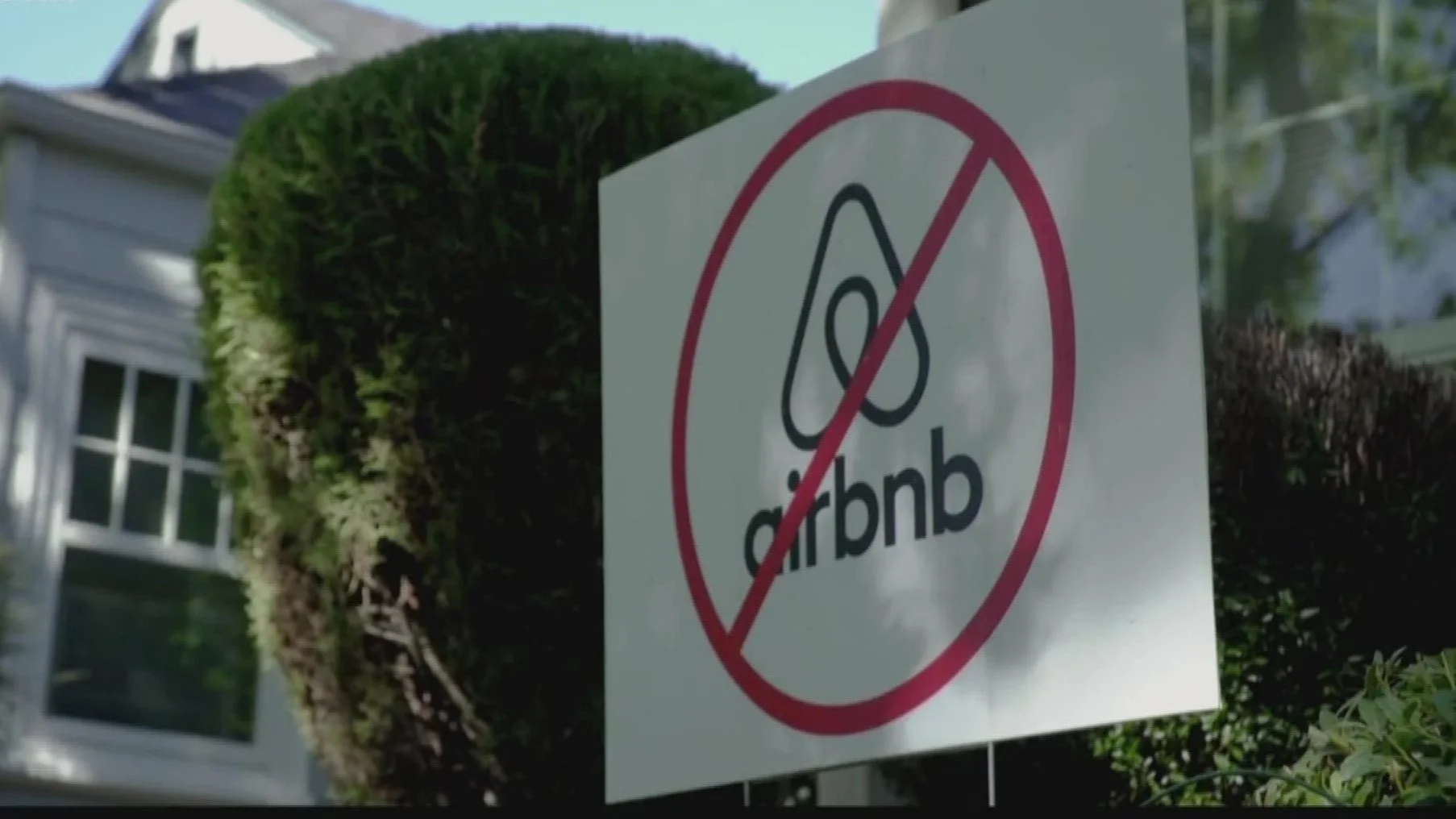
In Barcelona, in Lisbon, in Venice, in Amsterdam, in city after city, the pattern has been reported for years now and it does not vary much: apartments come off the long-term rental market, rents rise for the people who live there, and neighborhoods slowly convert from places where people live into places where people visit. Locals have marched about it. City governments have legislated against it, with mixed success. This is not a fringe claim or a matter of interpretation. It is one of the better-documented consequences of the last fifteen years of travel.
Now, we cannot tell you what any of this has done to Burgundy specifically. We have lived here a short time, there are not many Airbnbs around us, and the countryside is not Barcelona.
But that misses what matters, and here is the thing we actually believe:
We don't need the harm to be visible from our own front door to know which side of it we want to be on.
The question is not whether our village has been hurt. The question is whether we want to route the money of the people who trust us through a company whose growth has cost other people their homes. And the answer to that is no. Not because it is a hard call, but because it is an easy one.
What we do instead
Hotels, mostly. We stay in them, and we point clients toward them more often than anything else, because a hotel has a person in it. When the shower fails at eleven at night there is somebody downstairs whose actual job is to fix it. On a platform, there is a message thread and a hope.
Then there is the whole world of small, local, family-run lodging that existed long before any app did and is still, quietly, the best thing going. In France that means chambres d'hôtes (bed and breakfasts) and gîtes (furnished holiday rentals, run by local owners and overseen locally rather than by a platform in San Francisco). Across Europe it has a dozen other names. What they have in common is that somebody's family name is attached to the place, and they are answerable to the town they sit in.
Which matters, because of where the money lands. Stay in a family-run hotel or a chambre d'hôtes and your money mostly stays where you spent it. It pays a wage in that town. It keeps a building in use. It gives someone a reason to stay.
That is not a marginal preference for us. It is close to the whole point of the company. We do not think travel is neutral. Every trip is a set of small decisions about who gets paid, those decisions add up to something, and pretending otherwise is a way of not looking at it.
So no, we are not going to tell you that using Airbnb makes you a bad person, and we are not going to pretend we have never used it. Abstinence is not the argument. The argument is that there is nearly always a better option, that it usually costs about the same, that it takes a bit more effort to find, and that the effort is the job.
It is a job we are happy to do. The good news, which is the subject of the next article, is that once you start looking, the alternatives are not scarce at all. They are just quieter.
Some of you have broken up with Airbnb and some of you think we are being precious about a perfectly good app, and we would like to hear from both. What was the stay that decided it for you, in either direction?