
Knead to Know: Somebody Has to Get the Bread
(7 minute read)
If we forget the bread, we don't have bread.
I realize that sounds like a tautology, so let me explain what it means. We eat lunch as a household, five of us, and lunch has bread and cheese in it. Not sometimes. Structurally. The bread is not an accompaniment to the cheese, it is the delivery mechanism for the cheese, and without it there is no obvious way to proceed. Dinner might have bread with it, depending on what dinner is. Then whatever survives the day gets torn up the next morning into tartines for breakfast.
So the chain is short and unforgiving: no bread, no cheese, and quite possibly no breakfast either. There is, occasionally, a loaf in the freezer, and it is not the worst thing in the world. But it only gets there by accident, when we somehow failed to finish yesterday's bread and somebody bought more anyway, so half of it goes in the freezer rather than the bin. You cannot plan around this. It is not a reserve. It is the residue of a different mistake.
This, it turns out, is a real part of living in France, and nobody mentions it in the brochures. The bread run. Every single day.
The commute
There are no shops at all in our village, so bread requires a car and a plan. Ours is in Montchanin, and I go most mornings, because the gym I use is in Le Creusot and the boulangerie sits neatly on the way home. So my morning starts with weights and ends with a warm baguette on the passenger seat, leaving flour dust all over the upholstery if I have forgotten to bring a bag, which I frequently have. I would like to tell you I have grown blasé about this. I have not.
The bakery is staffed almost entirely by women, most of them in their twenties, a few older, and they are with one exception extremely nice. There is one who has never once been pleased to see me. Not hostile, exactly. Just visibly unmoved by my continued existence, and by my French, which after nearly two years remains a work in progress delivered with more confidence than it has earned. They know me now, though. That took about a year, and it is one of the small quiet victories of moving abroad.
What to actually buy
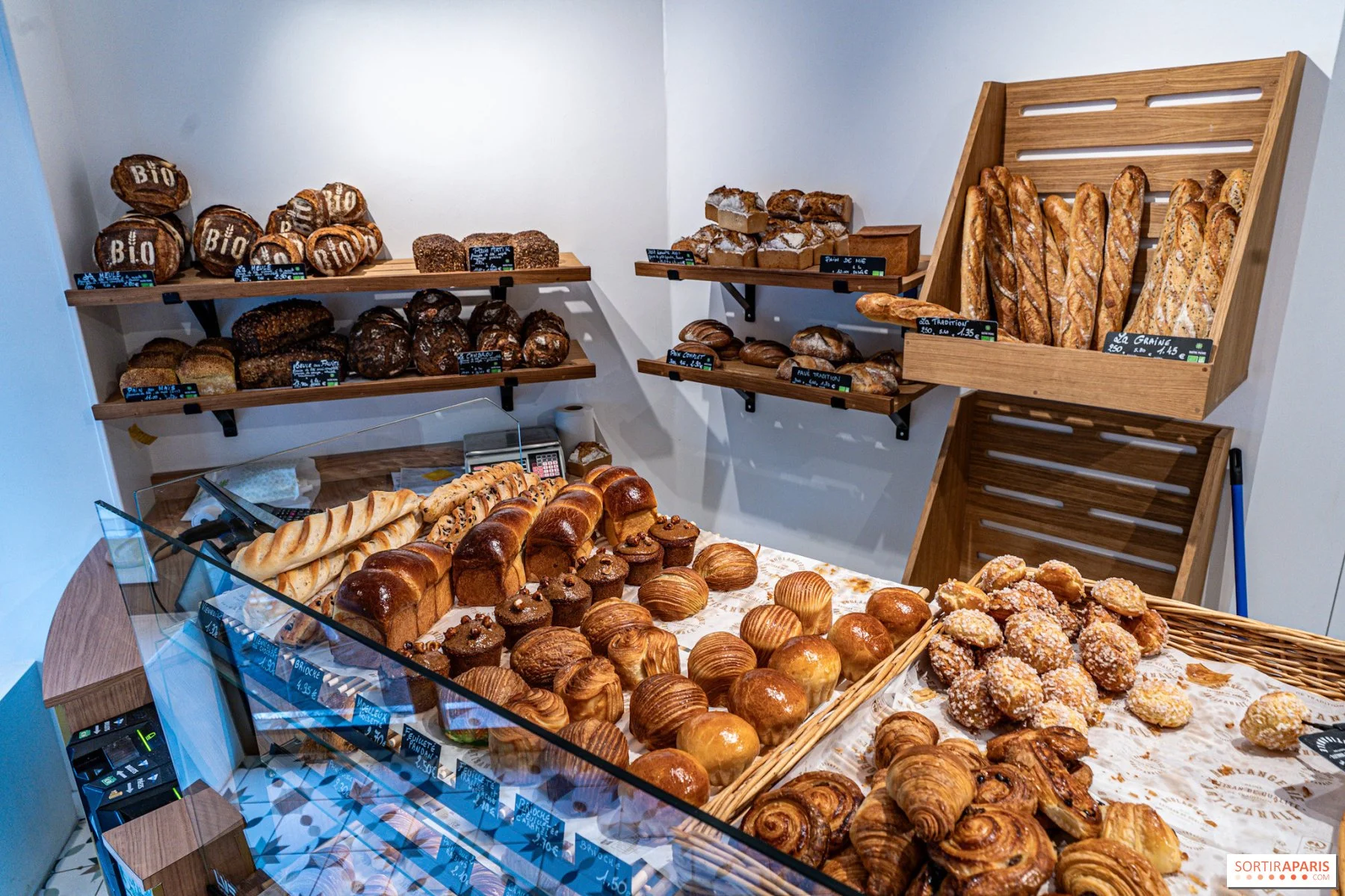
I aim for the tradition. An American walks into a French bakery and asks for "a baguette," which is a bit like walking into a bar and asking for "a beer." You will get one, and it will be fine. But the baguette de tradition is the one made under stricter rules, with better flour and slower fermentation, and once you have eaten it for a week you cannot go back. If they are out, I take a banette or an ordinary baguette and I do not complain, because the woman who dislikes me is watching.
If we have guests, I get brioche or croissants for breakfast, which is a small piece of theater and worth every euro. And they make sandwiches, extremely good ones, for four euros. I think about them more than I think about some restaurant meals.
None of this took long to work out. It just took eating. There is no shortcut and there is no article that will do it for you, including this one.
Things I have got wrong
Not long ago I bought something called pain d'Italie, or something close to it, and I have since blocked out the exact name the way you block out a bad hotel. It appeared to contain no salt. It had the flavor and structural personality of a cracker, which in principle sounds fine, because crackers and cheese is a perfectly good idea. In practice it was not. It was the wrong bread.
Our boulangerie is closed on Thursdays, and I have lived here the better part of two years and I forget this every single week. Every Thursday, without fail, I drive to a closed bakery and stand in front of it having precisely the thought I had seven days earlier. There is another bakery down the street that is open. It is not as good. We eat its bread on Thursdays and we say nothing.
And then there are the rules I looked up rather than learned. The internet will tell you that placing a baguette upside down on the table is bad luck. Possibly it is. In two years no French person has ever mentioned this to me, and I have watched a great deal of bread be put down in a great many ways. Which is the real lesson, and it took me a while to trust it: bread is not cheese. Cheese has an order, a correct knife, a wrong move you can make in front of people. Bread mostly does not. In plenty of French homes you simply tear it apart with your hands, at the table, and nobody says anything, because what would there be to say.
The one thing somebody taught me
Cutting, though. There is a way to cut it that changes depending on what you are about to do with it, and I did not work this out on my own. An ex-girlfriend showed me, and I have done it her way ever since.
For cheese, you cut across the baguette, straight down through the narrow width, into rounds. Small, sturdy, one bite of bread to one piece of cheese, and the whole engineering problem is solved. For tartines it is completely different: you cut a length about as long as your palm is wide, split it lengthwise like you are opening a sandwich, and put both halves in the toaster. Then butter, then jam or honey.
I am not going to tell you this is a rule, because I do not think it is. It is just a good idea that somebody handed me, which is how most of what I know about France arrived.
What we do when we fail
When we cannot get to the boulangerie, we buy a pavé at the supermarket. It is honestly not bad, and it has one clear advantage over a baguette, which is that it is still edible several days later. A baguette begins dying the moment it leaves the shop. The pavé just sits there, patient, being fine.
When I want a peanut butter and jelly sandwich, which I do, I buy pain de mie, the soft square sandwich bread that exists mainly in supermarkets and mainly for people like me. There is no French tradition to appeal to here. I want the sandwich of my childhood and I have made my peace with it. I also like German bread, dense and dark and sour and a completely different proposition, and I will not pretend otherwise while living a few hours from the border.
The last bite
Almost every article about European bread will tell you it is a way of life, and then say nothing further about the life.
Here is the life. Somebody has to go, and it is usually me. There is a woman there who does not like me, and a sandwich that costs four euros and is better than it has any right to be, and a closed door every Thursday that I never see coming.
And nothing gets thrown away. The pieces that go stale, and plenty do, get dropped into an old flour sack that lives in the kitchen. When the sack is full it goes one of two ways: every once in a while, on a Sunday, it becomes pain perdu (French toast, though the French name is better, since it means "lost bread"), and the rest of the time it goes to the equestrian center over in Saint-Eusèbe, where the horses are, I am told, extremely reliable customers.
That is the whole cycle, and it runs every day. Bread is bought, bread is eaten, bread goes stale, bread comes back as a Sunday breakfast or goes to a horse. There is no waste in it anywhere, and nobody in this house has ever once described it as sustainable, because it isn't a philosophy. It is just what you do with bread when somebody has to go and get it every morning.
The bread is on the passenger seat, still warm, on the road back from Montchanin, shedding flour onto the seat. That is not a metaphor for anything. It is just the best part of the day, and it happens because somebody remembered.
What did you get wrong the first month you lived somewhere new? Not the big things. The small daily ones nobody warns you about. Tell us in the comments.